
Why Manuel II Palaiologos Stayed With Me
When I started reading about the final years of the Byzantine Empire, I expected to learn about political struggles, military campaigns, and the decline of a civilisation that had survived for more than a thousand years.
Instead, I found myself becoming interested in the personal experiences of one emperor.
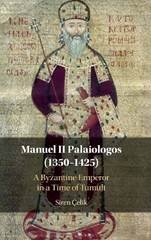
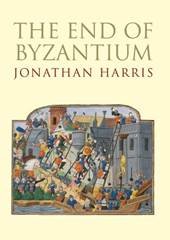
After reading Jonathan Harris’s The End of Byzantium and Siren Çelik’s Manuel II Palaiologos (1350–1425): A Byzantine Emperor in a Time of Tumult, I developed an unexpected sympathy for Manuel II.
Not because I necessarily agreed with his political ambitions or decisions, but because his life was filled with disappointments, difficult choices, and repeated attempts to overcome circumstances that were often beyond his control.
In some ways, his experiences reminded me of situations we encounter in our own lives.
A Difficult Path to the Throne
Manuel II was born in 1350, the second son of Emperor John V Palaiologos. His elder brother, Andronikos IV, was originally expected to inherit the throne.
However, after Andronikos rebelled against their father in 1373, Manuel was recognised as co-emperor and heir.
For Manuel, this must have represented an important change in his position within the imperial family.
But his circumstances soon changed again.
In 1376, Andronikos seized Constantinople and imprisoned his father and brothers, including Manuel. Although John V eventually recovered his throne in 1379, another political settlement in 1381–1382 restored Andronikos as the designated heir.
Manuel lost his position once again.
This episode particularly caught my attention.
Imagine being given an important responsibility, only to see it taken away because circumstances have changed. We cannot know precisely what Manuel felt, but it is not difficult to understand why such an experience might have been disappointing.
I found myself sympathising with him, not because he was necessarily entitled to the throne, but because his life seemed to involve repeated uncertainty about his future.
And his difficulties did not end there.
Someone Who Also Made Mistakes
One aspect of Manuel’s character that I appreciate is that he was far from perfect.
In 1382, he established himself in Thessaloniki and pursued a policy that differed from his father’s approach towards the Ottomans.
His efforts initially achieved some success, but his position became increasingly difficult to maintain. His policies also caused dissatisfaction among sections of the population.
By 1387, Manuel had abandoned Thessaloniki, which subsequently surrendered to the Ottomans.
This was hardly the outcome he had hoped for.
Yet I find this part of his story particularly relatable. Sometimes we make decisions believing they are reasonable, only to discover that we have underestimated the difficulties involved.
We might even contribute to the problems we are trying to solve.
Looking back, it is easy to identify what someone should have done differently. Making that decision while facing uncertainty is another matter.
This does not mean Manuel’s mistakes should be excused. His decisions had consequences, and they deserve critical examination.
But perhaps that is what makes his character interesting. He was neither consistently successful nor always correct.
He was someone who tried, sometimes failed, and continued looking for another way forward.
Trying to Preserve What Remained
Manuel eventually became emperor in 1391, following his father’s death.
By then, the Byzantine Empire had lost much of its former territory and influence. Its rulers had to navigate relations with more powerful neighbours, including the expanding Ottoman state.
Manuel’s reign involved a combination of diplomacy, negotiation, resistance, and accommodation.
His journey to Western Europe between 1399 and 1403 is one example. He travelled to seek support from European rulers, including the kings of France and England.
The journey did not secure the decisive military assistance he sought.
Nevertheless, I was struck by his willingness to travel so far in pursuit of possibilities that might improve his empire’s situation.
At the same time, the survival of Byzantium cannot be credited to Manuel alone. Wider events, particularly the Ottoman defeat by Timur at Ankara in 1402 and the subsequent period of Ottoman internal conflict, significantly changed the political circumstances.
These developments remind us that historical outcomes are rarely the achievement or failure of one individual.
Understanding Without Taking Sides
I think it is important to approach this period without reducing Byzantine-Ottoman relations to a simple contest between two religions.
Both empires operated within complicated political circumstances. Their rulers pursued their own interests, negotiated alliances, and made decisions shaped by the realities of their time.
Recognising Manuel’s personal difficulties does not mean that I regard the Byzantine political cause as more deserving than that of the Ottomans.
Nor does appreciating his persistence require me to approve of every action he took.
My interest is primarily in his experience as a human being.
We can study historical figures from different cultures and religious backgrounds, recognise their strengths and weaknesses, and learn something from their experiences without adopting their political or religious positions.
I believe that distinction matters when reading history.
What Stayed With Me
Manuel II died in 1425. The Byzantine Empire survived for another twenty-eight years before Constantinople fell during the reign of his son, Constantine XI, in 1453.
He did not restore the empire to its former strength, and many of the problems he faced remained unresolved.
Still, I think his persistence deserves some recognition.
His life involved family disputes, imprisonment, political setbacks, unsuccessful campaigns, and difficult diplomatic efforts.
Some of his decisions were questionable. Others may have helped preserve the limited opportunities available to his empire.
What interested me was not whether he should be celebrated as a great emperor, but how he continued to act despite the difficulties surrounding him.
Perhaps this is where his story feels personal.
In our own lives, we sometimes work towards something only to discover that circumstances have changed. Opportunities may disappear. Our decisions may prove mistaken. Efforts that seemed promising may produce disappointing results.
We then have to decide what to do next.
Of course, my experiences cannot be compared directly with those of a Byzantine emperor. But the feelings associated with disappointment, uncertainty, and the need to try again are not unfamiliar.
After reading these two books, I did not come away believing that Manuel II was an ideal ruler or someone whose decisions should always be followed.
I simply found myself understanding him a little better.
Among the many rulers whose histories are remembered for conquests and victories, Manuel II interested me for a different reason.
He was someone who did not always get what he wanted, did not always make the right decisions, and could not control everything happening around him.
Yet he continued trying.
Perhaps that is why his story has stayed with me.
The views expressed in this article are solely those of the author and do not necessarily reflect the views of The Opinion Desk.